
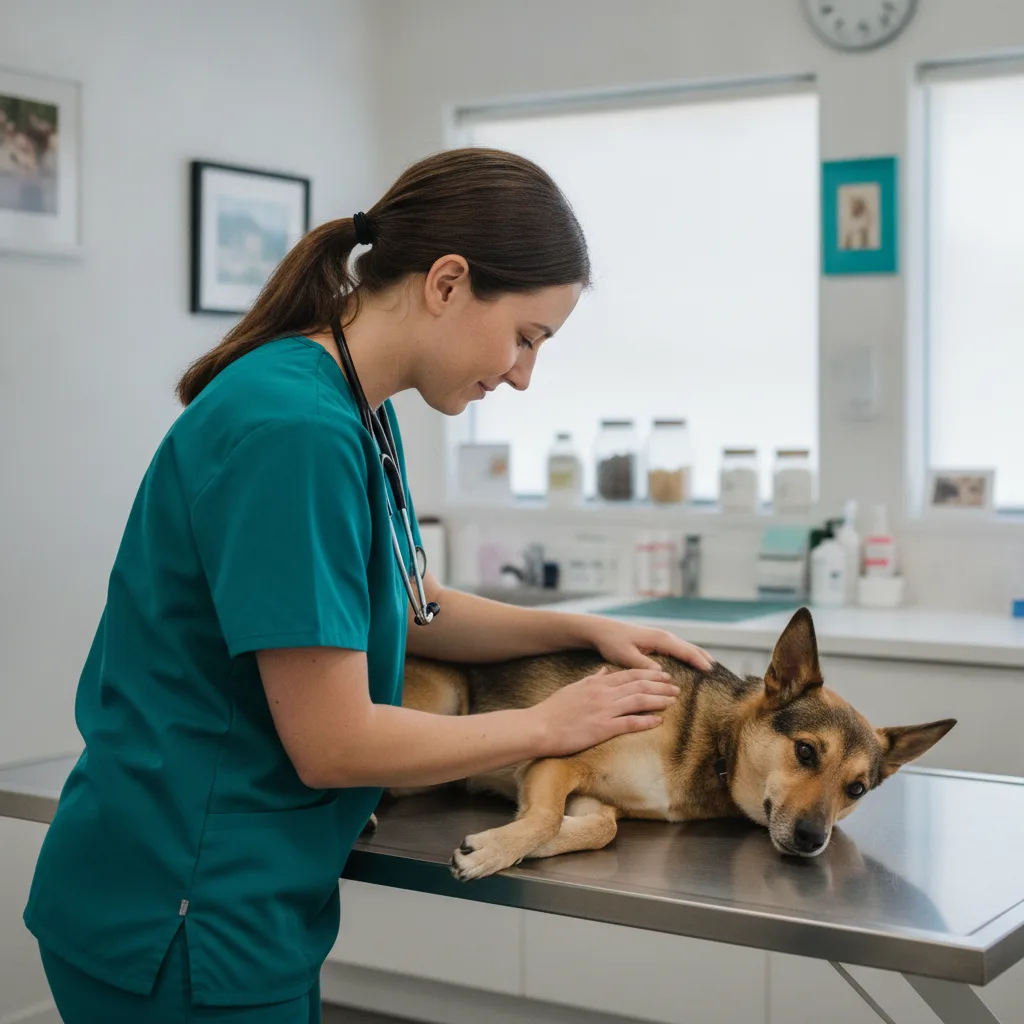
AI for Veterinary Clinics in Australia: A 2026 Guide
Australian vet clinics are caught in a difficult position: patient demand keeps rising while the workforce to meet it keeps shrinking. AI for veterinary clinics in Australia is no longer an experiment reserved for large hospital groups. In 2026, solo and two-vet practices are using AI tools to answer phones, fill appointment books, draft clinical notes, and send follow-up reminders without hiring a single extra staff member. This guide cuts through the vendor noise and gives you practical, numbers-backed guidance on where to start, what it costs in AUD, and what you can realistically expect back.
If you have ever lost a new client because the phone rang out at 6 pm, or watched a skilled vet nurse leave because the admin load became unbearable, the tools covered below were built for exactly that problem.
Key takeaways
- Australia has a documented veterinarian shortage, with 36.8% of vacancies taking more than 12 months to fill. AI is a practical gap-filler, not just a nice-to-have.
- An AI receptionist or booking chatbot typically costs AUD $200 to $600 per month. A single saved full-time receptionist role is worth $55,000 to $70,000 per year.
- AI clinical scribes can cut post-consultation note time by 60 to 80%, directly reducing the burnout that pushes vet nurses out of the profession.
- Australian Privacy Act obligations apply to all AI tools that handle client or patient data. You must check where your data is stored and processed.
- The highest-ROI starting point for most small clinics is AI for after-hours call handling and online booking, followed by AI-assisted clinical documentation.
Why the workforce shortage makes AI for vets urgent right now
The staffing crisis in Australian veterinary practice did not resolve after 2023. Jobs and Skills Australia has classified veterinarians as a shortage occupation, with 36.8% of open roles taking longer than 12 months to fill. There are approximately 15,042 registered vets across the country, concentrated in capital cities, leaving regional and outer-suburban clinics the most exposed.
The pressure is not limited to vets. A 2025 La Trobe University study found burnout among vet nurses is widespread, with many actively considering leaving the industry. When a vet nurse spends two hours a day answering repeat phone enquiries about flea treatments and vaccine schedules, that is two hours of skilled clinical time wasted on tasks a well-configured AI chatbot handles in seconds.
The Australian Department of Agriculture’s vet workforce roundtable identified retention as the primary lever, not recruitment. AI that removes low-value admin work is one of the most direct retention levers available to a small clinic owner today. For a broader look at how Australian businesses are responding to these pressures, the 2026 AI adoption statistics for Australia show that small businesses adopting AI now are pulling ahead in both efficiency and staff satisfaction.
The four highest-impact AI tools for vet clinics
1. AI receptionist and after-hours booking
This is where most small clinics get the fastest return. An AI voice receptionist answers calls 24 hours a day, seven days a week. It can confirm appointment availability in real time, book or reschedule appointments, collect a pet’s name, species, and reason for the visit, and escalate genuine emergencies to an on-call number. A text or web-based AI chatbot on your clinic website handles the same workflow for clients who prefer to type.
What this costs: Expect AUD $200 to $600 per month for a voice AI solution, or $80 to $250 per month for a web chatbot integrated with your booking system. Setup fees typically run $500 to $1,500 for a configured, veterinary-specific deployment.
What you save: A part-time receptionist working 20 hours per week costs roughly $28,000 to $35,000 per year including super. A full-time role costs $55,000 to $70,000. Even if AI handles only 60% of inbound call volume, you are looking at a payback period of two to four months for the voice AI investment.
For a deeper comparison of what an AI receptionist can and cannot replace, see this guide on the AI receptionist vs human decision.
2. AI clinical scribes
AI scribes listen to the consultation (with client consent) and generate a structured SOAP note draft in your practice management software. The vet reviews and approves rather than typing from scratch. Leading tools in this category include VetRec, Talkatoo, and DeepScribe (veterinary-configured versions). Most integrate directly with Provet Cloud and eVetPractice via API or copy-paste workflow.
What this costs: AUD $150 to $400 per month per clinic, depending on consultation volume. Some tools charge per-consultation at $0.80 to $2.50 per note.
What you save: If your vets spend 20 minutes per consultation on notes and you run 30 consultations per day, that is 10 hours of note-writing daily. At 60% time reduction, you recover six hours. Over a year, that compounds into thousands of hours of clinical capacity, or simply a more sustainable workday that keeps your staff from burning out.
3. Automated client communication and reminders
Most practice management systems have basic reminder functionality, but AI-powered communication tools go further. They personalise message timing based on client behaviour (for example, a client who always books at weekends gets a Saturday morning SMS), adapt reminder frequency if a client has not responded, and handle two-way SMS conversations without staff involvement.
Practical applications:
- Vaccination and annual health check reminders with direct booking links
- Post-surgery recovery check-ins at 24 hours and 72 hours
- Prescription refill reminders for chronic condition patients
- Lapsed client reactivation campaigns (pets overdue for a check)
- Review requests sent automatically after a successful appointment
What this costs: AUD $100 to $300 per month for a standalone tool, or included in broader practice management platforms. ROI is measured in recovered appointments: if 10 lapsed clients per month rebook at an average invoice of $180, that is $1,800 per month in recovered revenue from a $150 tool.
4. AI-assisted diagnostics support
This category is more relevant to clinics with in-house imaging. AI radiology tools (such as Vetology AI and SignalPET) analyse X-rays and flag abnormalities for vet review. They do not replace clinical judgement but they do reduce the time a vet spends staring at a film and provide a second-opinion layer that reduces diagnostic error.
What this costs: AUD $300 to $800 per month, typically reserved for clinics doing 10 or more radiograph cases per week. For high-volume practices, the time savings and reduced referral costs justify the spend. For low-volume clinics, this is a later-stage investment.
Choosing the right tools: integration and privacy checklist
Picking a tool that does not talk to your existing software is a common and expensive mistake. Before you commit to any AI solution, work through this checklist.
| Criteria | What to ask the vendor |
|---|---|
| Practice management integration | Does it connect natively with Provet Cloud, eVetPractice, or RxWorks? Or is it a manual workflow? |
| Data storage location | Is client and patient data stored on Australian servers? If not, what cross-border disclosure obligations apply? |
| Privacy Act compliance | Does the vendor sign a Data Processing Agreement? Are you notified of any breach within 72 hours? |
| Training and onboarding | Is there Australian-based support? What is the average time to go live? |
| Contract flexibility | Is it month-to-month or locked in? What is the exit process? |
| Clinical AI transparency | For diagnostic tools: is the AI output clearly labelled as a decision-support tool, not a diagnosis? |
Australian Privacy Act obligations are a serious consideration for any vet clinic handling personal information. Pet owner names, contact details, and payment records are personal information under the Act. If you are using an AI tool that sends this data to an offshore server for processing, you have notification and consent obligations. Read the AI and Privacy Act guide for small business before signing any vendor contract.
Realistic ROI for a two-vet practice: a worked example
Take a two-vet practice running 40 consultations per day, five days per week. Current setup: one full-time receptionist, one vet nurse handling overflow calls, and two vets writing notes after hours.
| AI tool added | Monthly cost (AUD) | Estimated monthly saving or revenue gain | Payback period |
|---|---|---|---|
| AI voice receptionist (after hours) | $350 | $800 (recovered after-hours bookings) + reduced call overflow on nurse | Under 1 month |
| AI clinical scribe | $280 | 90 min/day recovered per vet. Reduced after-hours overtime cost approx. $600 | Under 1 month |
| Automated reminders and reactivation | $150 | $1,500 to $2,000 in recovered lapsed client revenue | Under 1 month |
| Total | $780/month | $2,900 to $3,400/month benefit | Immediate positive ROI |
These numbers are conservative and do not include the harder-to-quantify value of reduced staff burnout, lower turnover risk, and improved client satisfaction scores.
Where to start: a three-step rollout for small clinics
- Month 1: Fix the phone problem. Deploy an AI booking chatbot on your website and, if budget allows, a voice AI for after-hours calls. This is the fastest ROI and the lowest operational risk. Your existing staff workflow barely changes.
- Month 2 to 3: Reduce the documentation burden. Pilot an AI clinical scribe with one vet for four weeks. Measure time saved per consultation. If both vets adopt it in month three, you have reclaimed significant clinical capacity.
- Month 4 onwards: Activate automated client communication. Set up vaccination reminder sequences, post-surgery check-in messages, and a lapsed client reactivation campaign. Connect these to a Google Reviews request to build your online reputation passively.
For guidance on structuring your first automation project, the beginner’s guide to your first AI automation walks through how to scope and prioritise the work without getting overwhelmed.
Frequently asked questions
Will an AI receptionist handle genuine emergencies correctly?
A well-configured AI receptionist is set up to recognise emergency keywords (difficulty breathing, collapse, suspected poisoning, trauma) and immediately escalate to an on-call number or direct the client to an emergency hospital. It does not attempt to triage clinical situations. The configuration of these escalation triggers is critical and should be reviewed by a vet before go-live.
Do AI tools for vets comply with Australian privacy law?
They can, but compliance depends on the specific vendor and your configuration. Under the Australian Privacy Act 1988, you must ensure client data is handled securely, individuals can access or correct their data, and any overseas data transfer is disclosed in your privacy policy. Always request a Data Processing Agreement from your vendor and check where data is stored. Clinics in states with additional health records legislation (such as the Health Records Act in Victoria) have further obligations.
Which practice management systems do AI tools integrate with?
The most common Australian practice management systems are Provet Cloud, eVetPractice, and RxWorks. Most reputable AI scribe and booking tools offer native integration with at least Provet Cloud. Always confirm integration depth before purchasing: some integrations are full two-way syncs while others are read-only or require manual export.
How long does it take to set up AI tools in a vet clinic?
A booking chatbot or AI receptionist typically goes live in two to four weeks, including configuration, testing, and staff training. An AI clinical scribe can often be trialled within days. More complex setups involving custom integrations with existing software take four to eight weeks. Month-to-month contracts let you test before committing.
Can AI really help with staff retention in a vet practice?
Yes, and this is one of the most under-discussed benefits. The NSW Parliamentary Inquiry into the Veterinary Workforce Shortage found that workload and administrative burden are primary drivers of attrition. When vet nurses spend less time on repetitive phone calls and vets spend less time on after-hours note writing, job satisfaction improves. AI does not replace skilled clinical staff. It removes the parts of the job that skilled staff find most demoralising.
Conclusion
The veterinary workforce shortage is not going away in the near term, and waiting for recruitment to solve the problem is not a viable strategy for a small clinic. AI for veterinary clinics in Australia in 2026 is affordable, practical, and delivering measurable ROI in practices that have made the move. Start with after-hours booking and phone handling, add a clinical scribe, and build from there.
If you want help scoping the right tools for your clinic’s size, software stack, and budget, the team at SellStack AI works with Australian small businesses to design and deploy AI systems that actually fit how you operate. Reach out to discuss what a practical rollout looks like for your practice.