AI Voice Receptionist: How It Works for Australian Businesses
An AI voice receptionist is an automated phone-answering system that greets callers, answers common questions, qualifies leads and books appointments, all without a human picking up. It runs 24 hours a day, handles multiple calls simultaneously, and responds in natural conversational speech. For Australian small businesses and clinics, it is the practical way to stop missing calls outside business hours.
What exactly does an AI voice receptionist do on a call?
An AI voice receptionist answers the call in real time, introduces itself using your business name, listens to the caller’s spoken request, and responds with pre-configured information or follow-up questions. It can capture caller details, triage enquiries by urgency, provide pricing or service information, and push a booking link or summary straight to your CRM or calendar. The whole exchange typically takes under two minutes and feels like speaking to a well-briefed staff member.
The underlying technology combines large language models with text-to-speech and speech recognition layers. The voice is no longer the stilted robot tone of older phone trees. Modern AI voice systems can handle interruptions, clarifying questions and even mild accents, which matters when your callers are spread across metro and regional Australia.
What the system does with the call data is equally important. A well-configured AI receptionist sends a structured summary to whoever needs it: the practice manager, the sales team, or a CRM like HubSpot or Go High Level. Nothing gets lost in a sticky note on a front desk.
Why do missed calls cost Australian businesses so much more than they realise?
A missed call is not just an unanswered phone. Research from lead-response studies consistently shows that a caller who does not reach a business on the first attempt will try a competitor within minutes. For service businesses and allied health clinics with an average client value of several hundred dollars or more, even a handful of missed calls per week translates to thousands of dollars in lost monthly revenue.
The timing problem is especially acute in Australia, where many small businesses and clinics run lean front desks. A physio or allied health practice might have a single receptionist managing check-ins, phone calls and a booking system at the same time. When a new patient rings during the lunch break or after 5 pm on a Friday, that call goes to voicemail and the patient books elsewhere before Monday morning.
After-hours enquiries are not a niche scenario. Many callers deliberately ring outside business hours because that is when they have time: evenings, weekends, early mornings. An AI voice receptionist captures those callers at exactly the moment they are ready to commit, rather than hoping they will try again later.
How is an AI voice receptionist different from a traditional phone tree or voicemail?
A traditional phone tree routes callers through a menu of numbered options. It cannot hold a conversation, answer an unexpected question, or adapt to what the caller actually says. Voicemail is even more passive: it records a message and hopes someone on your team listens and calls back before the lead goes cold.
An AI voice receptionist is conversational by design. The caller speaks naturally and the system responds in kind. If a caller says “I’m not sure which service I need, I’ve had this knee pain for a few weeks,” the AI can ask a clarifying question, suggest the right appointment type, and offer the next available time. That is a fundamentally different experience from “press 1 for appointments, press 2 for billing.”
The other difference is follow-through. A voicemail creates a task that someone on your team has to remember to complete. An AI voice receptionist completes a structured intake in the call itself, then fires that data directly into your workflow. The human on your team picks up a warm, pre-qualified lead rather than a cold callback list.
What kinds of businesses benefit most from an AI voice receptionist in Australia?
Any business that receives inbound phone enquiries and cannot guarantee a human will answer every call is a good candidate. Allied health clinics, physiotherapy and chiropractic practices, dental offices, legal firms, trades businesses, real estate agencies and home services providers all share the same problem: the phone is the primary first contact, and gaps in coverage leak revenue every week.
Allied health is a particularly strong fit. Patients often ring with a mix of clinical and administrative questions: “Do you bulk bill?” “How long is the first appointment?” “Can I see a female practitioner?” A trained AI receptionist handles these confidently and consistently without tying up a clinician’s time or overwhelming a front desk coordinator during a busy session.
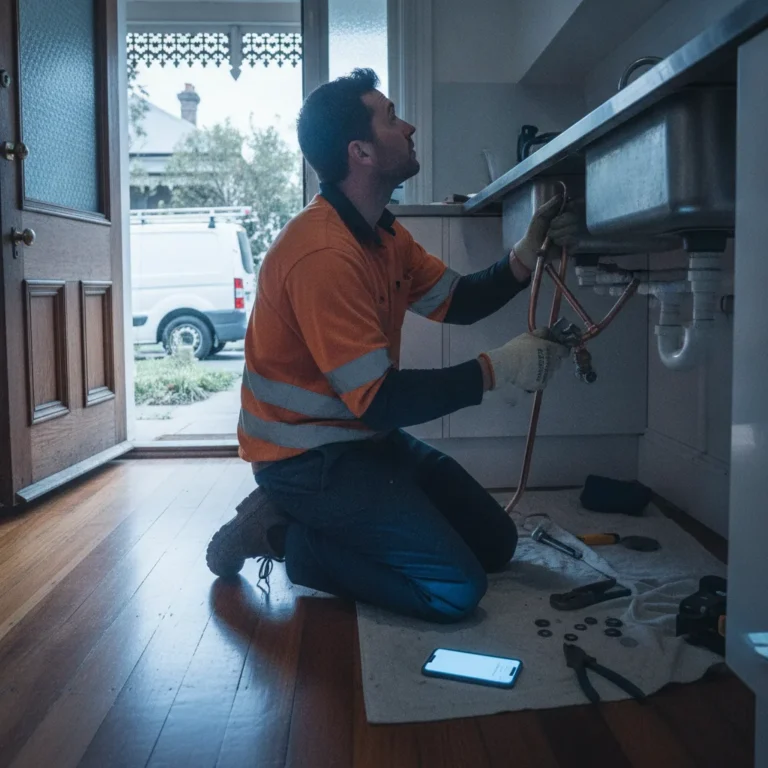
Trades and home services businesses benefit differently. Their enquiries often come from homeowners who rang three companies and will go with whoever responds first. An AI voice receptionist that answers immediately and captures the job details, even at 9 pm on a Tuesday, gives those businesses a genuine first-mover advantage over competitors whose calls roll to voicemail.
How much does an AI voice receptionist cost compared to a human receptionist?
A full-time human receptionist in Australia costs roughly $55,000 to $70,000 per year in salary alone, before superannuation, leave entitlements, training and the natural gaps that come with sick days and holidays. A part-time receptionist still leaves coverage gaps in the hours they are not rostered.
AI voice receptionist platforms typically operate on a monthly subscription model, often in the range of a few hundred dollars per month depending on call volume and features. That is a fraction of the cost of a single part-time staff member, with zero sick days, zero award rate complexity and consistent performance on every call. The economics are straightforward for any business fielding more than a dozen inbound calls per week.
The more useful financial lens is not cost comparison but revenue protection. If your average new client is worth $800 over their first three visits and your AI receptionist captures just two additional new bookings per week that would otherwise have been missed calls, the system pays for itself in a very short time. The lead leakage calculator concept applies directly here: the question is not what the technology costs but what the missed calls are already costing you.
What should you look for when setting up an AI voice receptionist?
Configuration depth matters enormously. A system that only reads a script will frustrate callers quickly. Look for a platform that allows you to define your services, your booking rules, your tone of voice, and your escalation triggers (for example, calls where a caller sounds distressed or asks to speak to a real person urgently).
Integration with your existing tools is equally important. Your AI receptionist should push data into the software your team already uses, whether that is a practice management system, a CRM, or a simple shared calendar. If the call summary lands in a separate inbox that nobody monitors, the value evaporates.
Finally, consider how the handoff to a human works. The best AI voice receptionist systems are not designed to replace human relationships entirely. They are designed to handle the volume, consistency and after-hours coverage so that when a human does take over, they have everything they need to provide a warm, informed experience to the caller.
Set up a Voice AI Receptionist for your business with Sellstack AI