Local Digital Marketing on the Sunshine Coast and Beyond
Local Digital Marketing in Australia: What Sunshine Coast Businesses Need to Know
Digital marketing in Australia for local businesses means reaching the right people in your region through paid ads, search, social media and AI-powered tools, rather than casting a generic national net. Done well, it drives real enquiries from people already looking for what you offer, whether you operate on the Sunshine Coast or serve customers across broader Australian markets.
Why does local digital marketing in Australia work differently to national campaigns?
Local digital marketing in Australia works differently because buying intent, competition levels and audience behaviour all shift dramatically by region. A campaign that performs well for a Melbourne retailer often needs a complete rethink for a Sunshine Coast trade business or a Noosa restaurant. Localised targeting, regional keyword research and community-aware creative all drive significantly stronger results than copy-pasted national strategies.
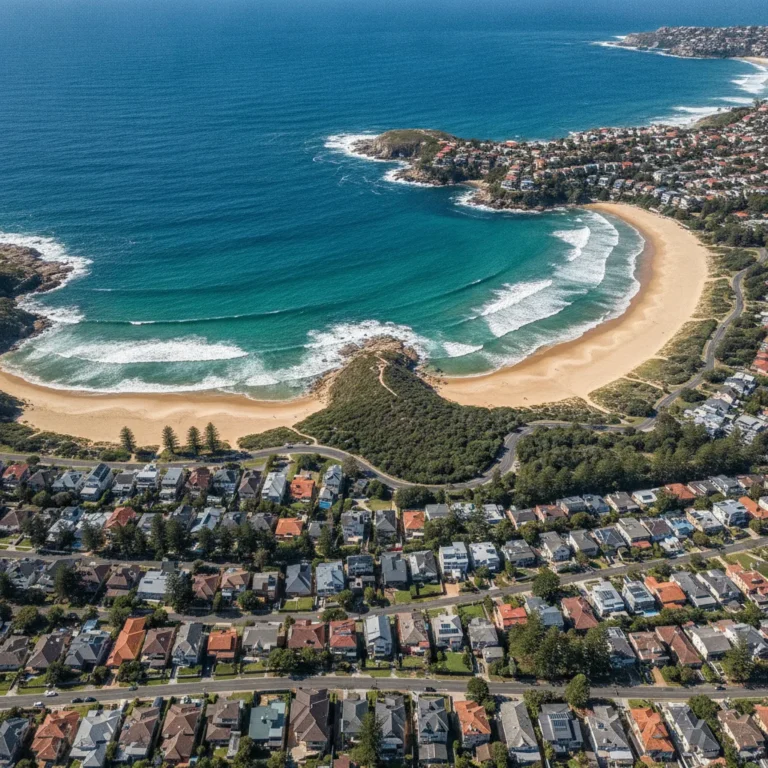
The Sunshine Coast is one of Australia’s fastest-growing regions, with a population that has consistently expanded over recent years and a business community that ranges from sole traders and allied health practices to hospitality venues and professional services. That growth creates real opportunity, but it also means more competition for eyeballs online.
Running a Google Ads campaign that targets “plumber Sunshine Coast” rather than simply “plumber Australia,” for example, immediately filters out irrelevant clicks and stretches your budget further. The same principle applies to Meta Ads: a café in Maroochydore does not need to pay to reach people scrolling in Perth. Tight geo-targeting is one of the most straightforward ways to improve return on ad spend, and it is something that gets overlooked constantly when businesses use cookie-cutter campaign templates.
What digital marketing channels should Australian small businesses focus on first?
Australian small businesses should focus first on Google Ads for immediate search demand, Meta Ads (Facebook and Instagram) for audience-building and retargeting, and their Google Business Profile for organic local visibility. These three channels consistently deliver the clearest, most measurable results for businesses with limited marketing budgets and tight timelines.
Here is how each channel earns its place in a local strategy:
Google Ads captures people who are actively searching for your service right now. Someone typing “physio near me” or “best café Caloundra” already has intent. A well-structured search campaign with tightly matched keywords and a strong landing page converts that intent into booked appointments and walk-ins. The key is not just switching the ads on but managing bids, negative keywords and quality scores so every dollar works harder.
Meta Ads on Facebook and Instagram work at a different stage of the funnel. They are ideal for building awareness, nurturing warm audiences and re-engaging people who have already visited your website or interacted with your content. For hospitality businesses, trades, retail and health practices, Instagram in particular has become a primary discovery platform, especially for customers under 45.
Google Business Profile is often the most underutilised free tool available to local Australian businesses. A complete, regularly updated profile with genuine customer reviews, current opening hours and accurate service descriptions directly influences whether you appear in the local map pack, which typically sits above paid results for location-based searches.
How is AI changing digital marketing for Australian businesses?
AI is changing digital marketing for Australian businesses by automating repetitive tasks like ad copy testing, audience segmentation and performance reporting, freeing up time to focus on strategy and customer experience. AI tools can now analyse campaign data faster than any human analyst, surface insights that would otherwise go unnoticed and help smaller businesses compete at a level that once required much larger marketing teams.
This matters particularly on the Sunshine Coast and in regional Australian markets, where many businesses are owner-operated and time is the most limited resource. When an AI system can draft five ad variations overnight, identify which audiences are converting and flag budget inefficiencies before they compound, even a sole trader can run campaigns with the rigour of a corporate marketing department.
Some practical examples: AI-assisted chatbots can handle after-hours enquiries for healthcare and hospitality businesses, ensuring leads are captured even when staff are unavailable. Automated reporting dashboards give business owners a real-time view of which campaigns are delivering and which are not, without needing to interpret raw data manually. Predictive audience tools inside Meta and Google’s own platforms, powered by machine learning, continuously refine who sees your ads based on actual conversion behaviour rather than assumed demographics.
The businesses that benefit most are those that treat AI as a practical operations tool rather than a buzzword. The goal is not to replace the human judgment behind a good campaign. It is to remove the administrative friction so that judgment gets applied where it actually counts.
What makes a Sunshine Coast digital marketing strategy different from the rest of Australia?
A Sunshine Coast digital marketing strategy differs from broader Australian approaches because the region has a distinct seasonal rhythm, a strong tourism influence, a high proportion of small and family-owned businesses, and a community that responds well to authentic, relationship-driven messaging rather than hard-sell tactics. Campaigns built around these local realities consistently outperform generic national templates.
Seasonality is a genuine factor here. Hospitality businesses see significant traffic peaks in school holidays and summer, while some service businesses experience quieter periods mid-year. A smart paid media strategy accounts for those fluctuations, ramping spend and creative during high-intent periods and pulling back or shifting to brand-awareness objectives when conversion volumes naturally dip.
The community fabric matters too. Sunshine Coast audiences tend to value local identity. Ads that reference real places, real scenarios and authentic business stories consistently outperform polished but generic creative. This is not sentiment, it is something visible in click-through and engagement data when you run regional campaigns with enough volume to draw conclusions from.
Finally, competition in many Sunshine Coast categories is still lower than equivalent markets in Brisbane or Sydney. That means a relatively modest, well-managed campaign budget can still achieve strong visibility, but that window will not stay open indefinitely as the region grows. Businesses that build strong digital foundations now, across paid search, social and organic, are investing in an asset that compounds over time.
Whether your business is based in Maroochydore, Noosa, Caloundra or anywhere in between, and whether you are looking to grow locally or extend your reach across broader Australian markets, a strategy built on the right channels, the right targeting and AI-assisted efficiency is what separates consistent growth from guesswork. Book a consult with our local digital marketing team.