Lead Conversion Automation: Turn More Enquiries Into Sales
Lead Conversion Automation: Turn More Enquiries Into Sales
Lead conversion automation uses software to respond to, nurture and follow up with enquiries automatically, so no lead goes cold because a human was busy. By removing manual gaps in the follow-up process, businesses typically contact leads faster, stay in front of them longer and book more appointments without adding headcount.
Why do so many enquiries fail to convert in the first place?
Most businesses lose leads not because the product or service is wrong, but because the response is too slow, too infrequent or simply never happens. Research from Harvard Business Review found that companies that contact leads within an hour are nearly seven times more likely to qualify them than those that wait even 60 minutes. Miss that window and the prospect has already called someone else, or simply moved on.
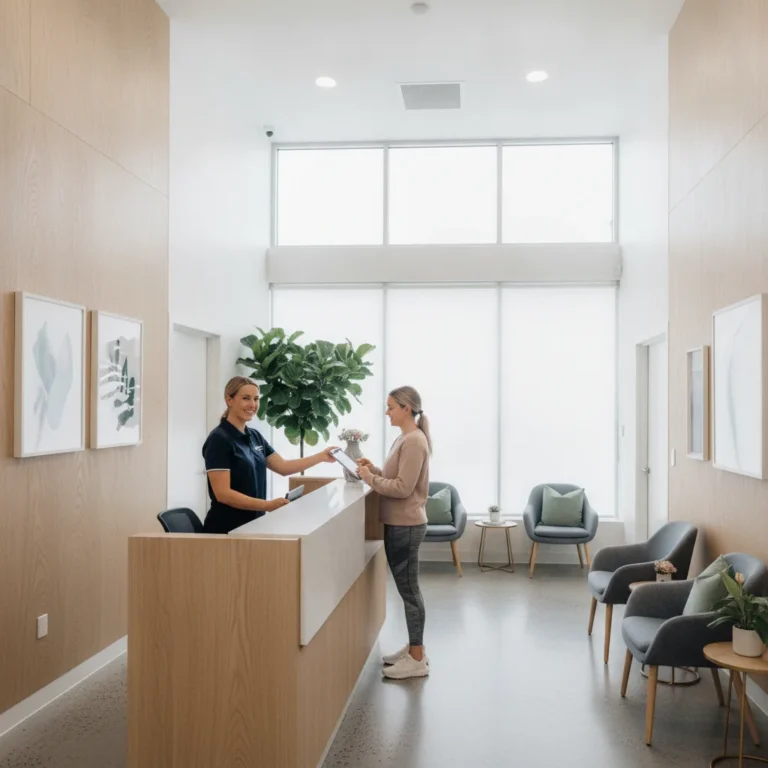
For clinics, trades businesses and professional service firms, the problem is structural. The team is with a patient, on a job site or in a consultation. Nobody is watching the enquiry inbox. A form fills in at 7:45 pm on a Tuesday. By the time the front desk opens the next morning and works through the overnight queue, the lead is already lukewarm at best.
Even when a business does respond promptly to the first enquiry, the follow-up trail goes cold almost immediately. One call, one email, and then silence. Yet the data is consistent: most deals close after five or more contact points. A single follow-up attempt leaves an enormous amount of revenue on the table.
Lead conversion automation closes all three of these gaps. Speed, persistence and consistency stop being dependent on how staffed or how busy the front desk is on any given day.
How does lead conversion automation actually work?
Lead conversion automation works by triggering a pre-built sequence of messages the moment an enquiry comes in, then continuing that sequence across multiple channels and touchpoints until the lead either books, opts out or is marked as won. The system acts on behaviour rather than waiting for a human to remember to follow up.
Here is what a typical sequence looks like for a clinic or service business:
- Instant acknowledgement. Within seconds of a form submission, missed call or online enquiry, the lead receives an SMS or email that confirms their enquiry has been received and sets a clear next step.
- Qualification and booking prompt. A short message, often conversational in tone, asks one or two qualifying questions and offers a direct link to book an appointment or call.
- Multi-day follow-up cadence. If there is no response, the system sends a second message on day two, a third on day four and so on, varying the channel (SMS, email, voicemail drop) and the angle of the message so it does not feel like a copy-paste blast.
- Re-engagement for older leads. Contacts who enquired weeks or months ago but never converted get a separate reactivation sequence, often referencing their original interest to feel personal rather than generic.
The whole process runs without any manual input unless the lead replies, at which point the conversation is handed off to the team to close. The automation handles volume. The human handles relationship.
What types of businesses benefit most from lead conversion automation?
Any business where enquiries arrive faster than the team can respond personally, or where after-hours leads are a regular reality, will see a clear return. Allied health clinics are a strong example: physio practices, psychology clinics, chiropractic and occupational therapy businesses field a constant flow of new patient enquiries, many of them submitted outside business hours. A missed call at 8 pm that goes uncontacted until 9 am the next day is not a warm lead anymore.
The same logic applies to trades and home services, mortgage brokers, legal practices and any other business that quotes or books consultations. The pipeline is made up of people who raised their hand at a specific moment. The longer the gap between that moment and a meaningful response, the lower the chance of conversion.
Businesses sitting on a backlog of old quotes or unconverted enquiries also have a specific opportunity here. A reactivation campaign run through an automated sequence can move those dormant contacts through the pipeline without anyone on the team manually working through a list. That represents found revenue from work that was already done.
What should a lead conversion automation setup actually include?
A solid setup has a few non-negotiable components. First, it needs to connect to wherever your leads actually come from: your website contact form, your Google Business profile, your social media enquiry forms, your phone number. If any channel sits outside the automation, you have a leak.
Second, the messaging needs to sound like your business, not like a bulk SMS platform. Generic “Hi there, thanks for your interest” messages get ignored. Personalisation at the field level (first name, service enquired about, location) and a conversational tone that matches how your team actually speaks makes a material difference to open and reply rates.
Third, you need a clear handoff point. Automation is for volume and consistency. A human is still required to close the conversation, handle objections and confirm the booking. The system should make it easy for the team to pick up exactly where the automated sequence left off, with full context on what was sent and when.
Finally, measurement matters. Knowing which enquiry sources convert at the highest rate, which messages in a sequence get the most replies and where leads are dropping off gives you the information to keep improving. A setup that runs but cannot be improved is a missed opportunity.
How is lead conversion automation different from just sending more emails?
Sending more emails is a tactic. Lead conversion automation is a system. The difference is that a system runs on triggers and logic rather than someone’s memory or calendar. It responds in seconds rather than hours. It follows up five times without anyone having to decide to do so. It works at 11 pm on a Sunday the same way it works at 10 am on a Monday.
Bulk email tools also tend to treat every contact the same way. Automation tools respond to what a contact does: if they click a link, open a message or reply, the sequence adjusts accordingly. A lead who has already clicked through to your booking page gets a different next message than one who has not opened anything yet. That kind of responsiveness is what moves conversion rates, not just message volume.
The other meaningful difference is the channel mix. Email alone is not enough. SMS open rates consistently outperform email, with some studies putting average SMS open rates above 90 percent. A sequence that combines SMS, email and where appropriate a brief voicemail reaches leads across their preferred channels rather than betting everything on the inbox.
For clinics and service businesses that are already stretched thin at the front desk, this combination of speed, persistence and intelligence is what makes lead conversion automation worth implementing. It does not replace the people on your team. It gives them back the time they were losing to manual follow-up, and it makes sure that no enquiry quietly disappears because the day got busy.
Set up lead conversion automation with Sellstack AI