How Google Ads for Small Business Wins More Local Customers
How Google Ads for Small Business Wins More Local Customers
Google Ads for small business works by placing your service in front of people who are actively searching for it right now. Done well, a local campaign can fill your calendar faster than any organic strategy alone. Done poorly, it drains budget on clicks that never convert. This post shows you how to get the first outcome, not the second.
Why do Google Ads for small business actually work at the local level?
Google Ads work for small local businesses because the targeting matches buyer intent perfectly. Someone searching “physio near me” or “plumber open now” is ready to book, not just browsing. Google’s own data consistently shows that search ads drive a majority of high-intent, location-based conversions, which is precisely the audience a small business needs to reach.
Organic SEO is valuable, but it can take six to twelve months to gain traction for a brand-new business. A Google Ads campaign can appear at the top of local search results within hours of going live. That immediacy is worth something real when you have appointment slots to fill or quotes to close this week.
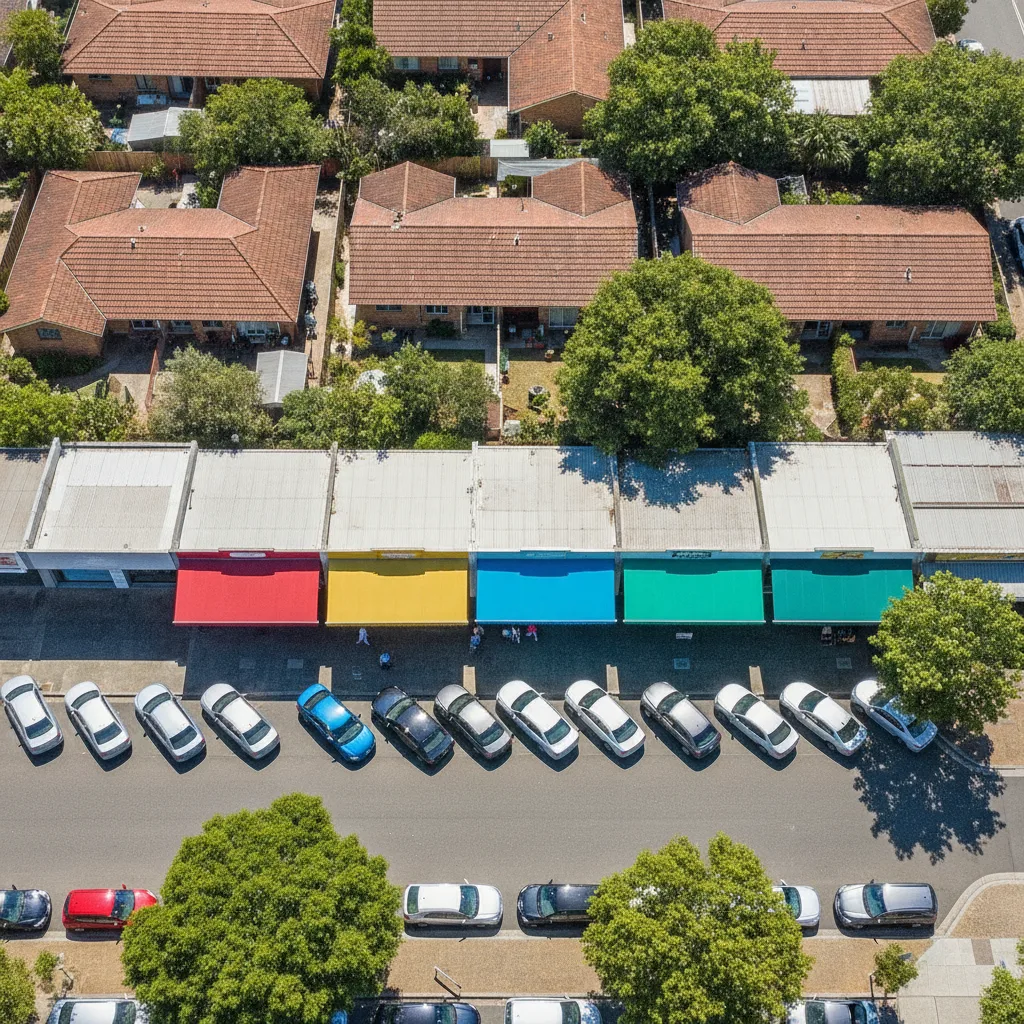
The other reason local campaigns work so well is geographic precision. You can limit your ads to a five-kilometre radius around your clinic or shopfront, so you are never paying for a click from someone who would never actually make the trip. Combined with ad scheduling, which lets you run ads only during the hours your team can respond, the budget goes toward people who can realistically become customers today.
What should a small business budget for Google Ads to see real results?
A small business running local Google Ads typically needs a minimum of $30 to $50 per day to gather enough data to optimise effectively. Below that threshold, the campaign may go days without generating a single conversion signal, making it almost impossible to judge what is and is not working. The right number depends on your average customer value and your local cost-per-click.
Cost-per-click in competitive service categories like healthcare, legal and home services can range from $5 to $25 in Australian metro markets. If you are a physiotherapy practice, for example, and a new patient is worth $600 to $1,200 over their first treatment cycle, spending $150 to acquire that patient is an outstanding return. The mistake most small business owners make is setting a budget that is too low to compete in their category, then concluding that ads “don’t work.”
A practical approach is to start with a defined test period of 30 days at a meaningful daily budget, track every conversion (phone calls, form fills, booking completions), and only then decide whether to scale or adjust. Cutting spend after three days of data is one of the most common reasons local campaigns fail before they have had a fair chance.
How do you stop Google Ads from wasting budget on the wrong clicks?
You stop wasted spend on Google Ads by combining three things: tightly grouped ad groups, a strong negative keyword list, and conversion tracking that actually fires. Without these three in place, even a generous budget can produce a lot of irrelevant traffic and a very confusing report at the end of the month.
Negative keywords are the most overlooked lever available to small business advertisers. If you run a private physiotherapy clinic, you almost certainly do not want clicks from people searching for “physio jobs,” “bulk billing physio,” or “free sports physio.” Adding those terms as negatives from day one can reduce wasted spend by 20 to 30 percent before a single optimisation iteration is complete.
Conversion tracking is equally non-negotiable. If your goal is phone calls, you need a call tracking number connected to your Google Ads account so the platform knows which keyword and which ad drove each call. If your goal is online bookings, the confirmation page needs a properly firing conversion tag. Without that feedback loop, Google’s automated bidding strategies are essentially guessing, and they will guess wrong far more often than they should.
Ad copy also does heavy lifting here. A headline that says “Physio Appointments Available This Week. Book Online.” naturally filters out people who are not ready to commit, reducing your cost-per-conversion even if the click-through rate dips slightly. Specificity in the ad copy acts as a natural pre-qualifier, so the people who do click are already leaning toward booking.
What makes a Google Ads landing page convert for local service businesses?
A Google Ads landing page converts for local service businesses when it does one thing: removes every possible reason to hesitate. That means the page loads fast on mobile, shows a clear call to action above the fold, includes social proof (reviews, credentials, years in practice), and makes it trivially easy to call or book in two taps or fewer.
Sending paid traffic to your homepage is one of the most reliable ways to lower your conversion rate. A homepage is designed to explain everything about your business. A landing page is designed to convert one specific type of visitor. Someone who clicked an ad for “remedial massage inner west” should arrive on a page about exactly that service, not a general homepage where they have to find their own way to a booking form.
Page speed matters more than most small business owners realise. Google’s research has shown that a one-second delay in mobile load time can reduce conversions by up to 20 percent. A lightweight, purpose-built landing page consistently outperforms a feature-heavy website page when the goal is paid traffic conversion.
How does Google Ads fit alongside other lead generation tools for small clinics and service businesses?
Google Ads sits at the very top of the lead generation funnel: it brings the enquiry in the door. What happens next, how fast that enquiry is responded to, whether missed calls are followed up and whether old leads are reactivated, determines whether that ad spend turns into actual revenue.
Many small clinics invest in Google Ads and then lose a significant portion of the leads they generate because the front desk is busy, after-hours enquiries go unanswered, or a quote sent two weeks ago never got a second follow-up. The ad performed. The follow-up system did not. That is a lead leakage problem, and it quietly erodes the return on every dollar spent on ads.
Automation tools that handle instant responses to missed calls, reactivate old quotes, and follow up new enquiries across SMS and email are what bridge the gap between a click and a confirmed booking. Ads bring the opportunity. A smart follow-up system closes it.
The combination, targeted Google Ads campaigns feeding into an automated enquiry and follow-up system, is how small service businesses compete with larger operators who have dedicated sales teams. You get the lead volume of a business twice your size without the overhead of a full reception team working around the clock.
Start a managed Google Ads campaign with Sellstack AI