
Lead Follow-Up Automation for Gold Coast Businesses: Win More Jobs
Lead Follow-Up Automation for Gold Coast Businesses: Win More Jobs
Lead follow-up automation for Gold Coast businesses means using AI-powered tools to contact every enquiry instantly, follow up multiple times across SMS and email, and book jobs without your team lifting a finger. It removes the gap between a prospect reaching out and your business responding, so fewer leads go cold and more quotes turn into revenue.
Why do most Gold Coast businesses lose leads before they even realise it?
Most Gold Coast businesses lose leads because the window between an enquiry arriving and a competitor answering is measured in minutes, not hours. Research from Harvard Business Review found that businesses contacting a web lead within five minutes are nine times more likely to convert them than those who wait even thirty minutes. When your front desk is busy with existing clients, that window slams shut fast.
Here is the pattern that plays out dozens of times a week across trades, clinics, real estate agencies and service businesses on the Gold Coast. Someone fills out a contact form or calls after hours. Nobody picks up. They fire off the same enquiry to two or three competitors. By the time your team calls back the next morning, the person has already booked with someone else. They were never rude about it. They simply moved on.
It is not a staffing problem. It is a timing problem. And timing problems are exactly what automation solves.
The cost adds up faster than most owners expect. If your average job is worth $800 and you miss four enquiries a week because of slow follow-up, that is over $160,000 in potential revenue walking out the door every year. Those are not leads you spent nothing to get. You paid for them through Google Ads, referral networks, SEO or your reputation. Letting them leak away quietly is one of the most expensive things a local business can do.
What does lead follow-up automation actually do for a local business?
Lead follow-up automation handles the immediate response, the multi-touch nurture sequence and the appointment booking on your behalf, around the clock. The moment an enquiry lands, whether it is a missed call, a web form, a Facebook message or an after-hours voicemail, an automated sequence fires off a personalised SMS or email within seconds, keeping the conversation alive until a human needs to step in.
The practical steps look something like this. An enquiry arrives at 9 pm on a Tuesday. The system sends a friendly text acknowledging the enquiry and asking a qualifying question. The prospect replies. The system responds, answers basic questions and offers a booking link. By Wednesday morning your team wakes up to a confirmed appointment rather than a cold lead to chase.
That first contact is just the beginning. Studies consistently show that most leads do not convert on the first touch. It typically takes between five and eight follow-up attempts before a prospect becomes a client, yet the majority of businesses give up after one or two tries. Automated sequences keep following up at sensible intervals, across different channels, without your team having to remember who needs a nudge.
For trades on the Gold Coast, this means quotes sent on a Friday afternoon get a follow-up SMS on Monday and a second reminder on Wednesday, rather than disappearing into the inbox graveyard. For allied health clinics, it means missed appointment enquiries get re-engaged before the prospect books with a bulk-billing competitor down the road. The system does not sleep, does not forget and does not feel awkward about following up twice.
How is automated follow-up different from just sending a bulk email?
Automated follow-up is different from bulk email because it is triggered by individual behaviour and responds to what each specific person does next, rather than blasting the same message to an entire list at the same time. It is a one-to-one conversation at scale, not a broadcast. The sequence adapts based on whether a person replied, clicked a link, booked an appointment or went quiet.
Bulk email treats every contact the same way regardless of where they are in the buying process. A properly built follow-up automation sequence treats the person who just asked for a quote very differently from the person who enquired three months ago and never converted. The messaging, timing and channel all shift based on context.
This matters enormously for Gold Coast businesses operating in competitive local markets. A tradie sending a templated “just checking in” email to a three-day-old quote looks attentive. That same email going to a six-month-old cold lead looks tone-deaf. Good automation knows the difference and adjusts accordingly.
Personalisation also extends to the channel. Some prospects respond to SMS within minutes and never open emails. Others prefer a quick call reminder. A well-designed automation system tests and routes based on engagement, meaning your follow-up lands where the person is actually paying attention.
Which Gold Coast businesses benefit most from lead follow-up automation?
Any Gold Coast business that relies on inbound enquiries converting to booked appointments or accepted quotes will see a direct return from lead follow-up automation. That covers a wide range of industries, though a handful consistently see the sharpest results.
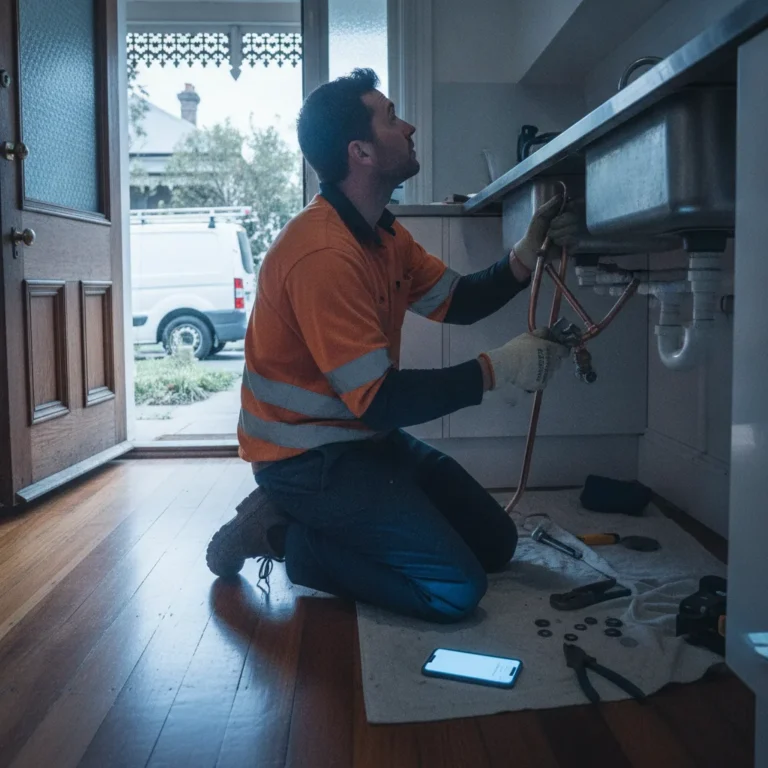
Trades and home services are a natural fit. Builders, electricians, plumbers, landscapers and pool companies on the Gold Coast often receive dozens of quote requests a week, many of them arriving via web form or missed call outside business hours. The gap between enquiry and response is where revenue leaks fastest in this sector.
Allied health clinics, including physio practices, psychology services, chiropractic clinics and dental groups, face a specific challenge: new patient enquiries are time-sensitive because people in discomfort or seeking mental health support will book with whoever responds first. An AI front desk that answers instantly, qualifies the enquiry and offers a booking link competes on speed rather than just reputation.
Real estate agencies, mortgage brokers, gyms, beauty businesses and legal practices all face the same underlying pressure: a lot of inbound interest, not enough staff hours to nurture every lead through to conversion. Automation fills the gap without inflating payroll.
Old leads and unsold quotes are another category worth mentioning. Most businesses are sitting on a database of people who enquired six, twelve or even twenty-four months ago and never converted. A structured reactivation sequence sent to that list is often the fastest way to generate bookings without spending another dollar on advertising.
What should a good lead follow-up automation setup include?
A good lead follow-up automation setup should include an instant first response, a multi-step nurture sequence, two-way conversational capability, calendar booking integration and clear handoff rules for when a human needs to take over. Each of these components serves a specific function, and missing any one of them creates a gap that lets leads slip through.
The instant first response is non-negotiable. Speed is the single biggest conversion lever in local service businesses. Getting a message to a prospect within 60 seconds of their enquiry arriving is the difference between being first in the conversation and playing catch-up.
The nurture sequence should run across at least five to eight touchpoints over a period of days or weeks, depending on your typical sales cycle. Each message should feel like a natural continuation of a conversation rather than a robotic reminder. Tone matters here. The copy should sound like your business, not like a generic CRM template.
Two-way conversational capability is what separates modern AI follow-up tools from old-school autoresponders. When a prospect replies with a question, the system should be able to handle common queries, qualify the lead further and route complex questions to a human. Calendar booking integration means that once a prospect is ready to commit, they can lock in a time without waiting for your front desk to find a gap.
Finally, clear handoff rules ensure your team only gets involved at the right moment, when a lead is warm, qualified and ready to talk. That protects your team’s time and keeps the experience professional from the prospect’s perspective.
Getting this set up properly takes more than plugging in a tool. It takes understanding your specific enquiry types, your sales cycle, your team’s capacity and the way your best clients actually communicate. That is the kind of configuration work that separates automation that converts from automation that just sends messages into the void.
If you are ready to stop watching warm leads go cold and start turning your enquiry volume into booked jobs, the next step is straightforward. Automate your lead follow-up with Sellstack AI on the Gold Coast.