
AI for Small Business in Brisbane’s Western Suburbs: Where to Start
AI for Small Business in Brisbane’s Western Suburbs: Where to Start
AI for small business in Brisbane’s Western Suburbs is most effective when you start with one high-friction problem, typically missed calls, slow lead follow-up or unconverted quotes, rather than trying to automate everything at once. Fix the revenue leak first, prove the return, and build from there. Most local businesses see measurable results within the first 30 days.
Why are Brisbane Western Suburbs small businesses talking about AI right now?
Small businesses across Kenmore, Indooroopilly, Toowong, Jindalee and the broader western corridor are fielding more enquiries than ever through more channels than ever: phone, Google Business, Facebook, website chat, Instagram DMs. The problem is that a two-person trade business or a four-chair allied health clinic simply cannot respond to all of them fast enough, especially after hours or during a busy run of appointments. When a competitor picks up that enquiry in two minutes and you call back three hours later, the job is gone. That dynamic is pushing local operators toward AI tools that work quietly in the background, handling the first touch so the human team can focus on doing the actual work.
The western suburbs also have a specific business profile worth noting. You see a high concentration of trades, health clinics, professional services and owner-operated retail. These are businesses where the owner is often also the technician, the bookkeeper and the salesperson. Time is the scarcest resource, and any tool that buys back even an hour a day earns its keep quickly.
What does AI for small business in Brisbane’s Western Suburbs actually look like in practice?
Practically speaking, AI for small business in Brisbane’s Western Suburbs tends to show up in three places first: automated responses to missed calls, follow-up sequences for quotes and enquiries that went cold, and after-hours conversation capture via SMS or web chat. These are not futuristic concepts. They are running right now in businesses just like yours, using tools that connect to the phone system and CRM you already have.
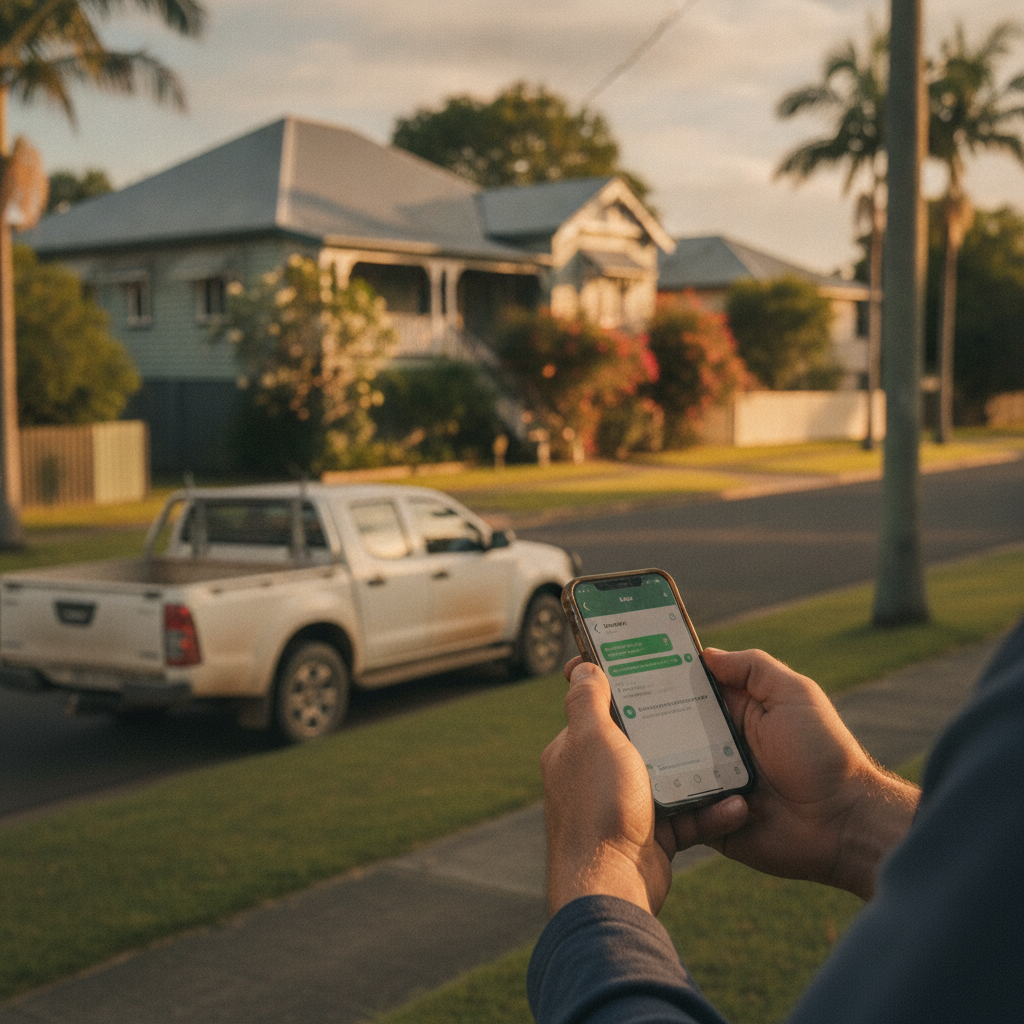
Here is a concrete scenario. A physio clinic in Sherwood closes at 6 pm. Between 6 pm and 9 pm, three people call about new patient bookings. In the old world, those calls go to voicemail. Maybe one person leaves a message. Maybe they get a callback the next morning and book. More likely, they have already booked with another clinic they found on Google. With an AI-powered missed call text-back, each caller receives an SMS within 60 seconds: a warm, human-sounding message that asks how the clinic can help and offers a booking link. Research from sales performance consultancy Velocify found that responding to a lead within one minute increases conversion by up to 391 percent compared to a five-minute delay. That gap gets even wider after hours.
A second scenario: a building inspector in Darra sends 40 quotes a month. About 15 percent convert. The other 85 percent go cold, and nobody on the team has time to chase them all. An automated reactivation sequence, a short series of personalised SMS or email messages spaced over two weeks, can bring a meaningful percentage of those cold quotes back to life. These are people who already raised their hand. They just needed a nudge at the right moment.
Where should a small business owner start with AI automation?
Start with the problem that is costing you the most money right now. For most small businesses in the Brisbane western suburbs, that is lead leakage: enquiries that arrive but never convert because response time is too slow or follow-up falls off after the first attempt. Audit one month of your missed calls and unanswered web enquiries, then multiply that number by your average job value. That figure, often surprisingly large, tells you exactly what to fix first.
A useful framework is to prioritise automation in this order. First, capture: make sure every inbound enquiry is acknowledged within minutes, even at 10 pm on a Saturday. Second, nurture: build a follow-up sequence that touches cold leads at least five times across different channels before marking them as lost. Studies consistently show that around 80 percent of sales require five or more follow-up contacts, yet most small business owners stop at one or two. Third, qualify: use AI chat and SMS workflows to ask a few key questions before a human gets involved, so your team is only spending time on leads that are actually ready to buy.
You do not need to rebuild your entire operation. The businesses that get the fastest results pick one of these three steps, implement it cleanly, and measure the outcome over 30 days before adding the next layer.
What AI tools are realistic for a small team with no dedicated tech staff?
The good news for small business owners across Ipswich Road, Moggill Road and the rest of the western suburbs corridor is that the most effective AI tools available today are designed to be operated by non-technical people. You should not need a developer or an IT team to run them. The setup is handled once, typically by a specialist who connects the tools to your existing phone number, CRM or booking system, and then the workflows run without you touching them.
The categories worth knowing about are: missed call text-back systems that respond to any unanswered call via SMS automatically; multi-step lead nurture sequences that run on a schedule and pause the moment someone replies; and AI-assisted front desk chat for websites and Facebook pages that can answer common questions, collect contact details and route urgent enquiries to a human. For allied health clinics specifically, these tools can handle new patient enquiries, appointment reminders and cancellation fill without the receptionist picking up the phone for every interaction.
The key criterion to apply to any tool: does it reduce the number of things your team has to remember to do manually? If a workflow requires someone to press a button to trigger it, it will eventually be forgotten. The best automations run on events, a missed call happens, a quote is sent, a form is submitted, not on human memory.
How do you measure whether AI automation is working for your business?
Measurement does not need to be complicated. Track three numbers before you start any automation, then compare them at 30 and 60 days. First, your lead response time: how long does it take from the moment an enquiry arrives to when the person receives a reply? Aim to get this under five minutes for any channel, around the clock. Second, your follow-up rate: what percentage of quotes or enquiries receive at least three follow-up contacts? If the answer is below 50 percent, you have a significant revenue leak. Third, your conversion rate from enquiry to booked job or appointment. Even a two or three percentage point improvement in conversion, on a volume of 50 leads per month, compounds meaningfully over a year.
Brisbane’s Western Suburbs small business market is competitive but not saturated with operators who have figured this out yet. The businesses that install these systems in the next 12 months are the ones that will be pulling ahead by 2026, not because AI is a magic answer, but because consistent, fast, multi-touch follow-up is simply better than what most competitors are doing.
Book a free sales operations audit with Sellstack AI for your Brisbane Western Suburbs business