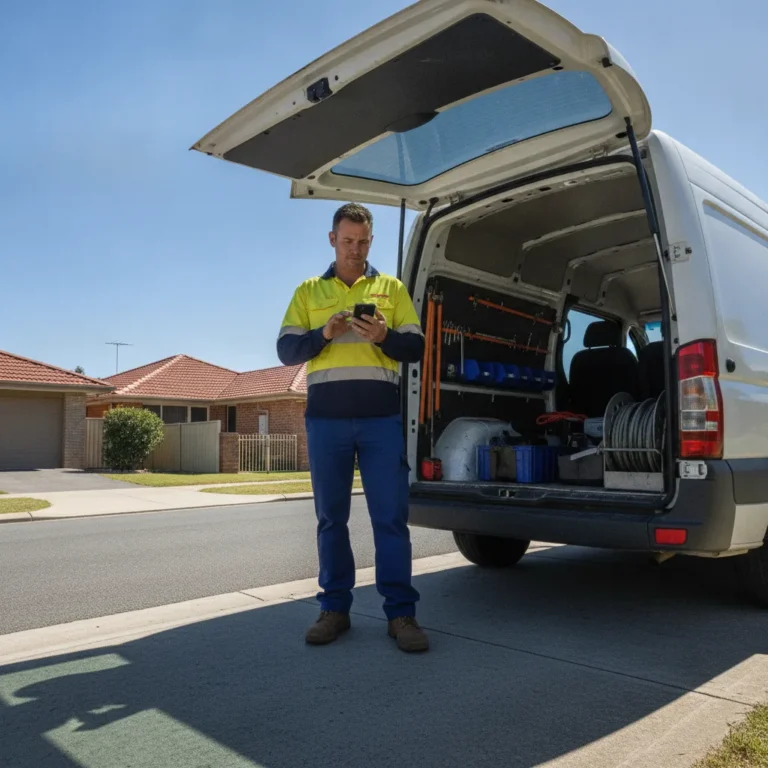
What Is Lead Conversion and Why Does It Matter for AU Businesses?
What Is Lead Conversion and Why Does It Matter for AU Businesses?
Lead conversion is the process of turning a prospect who has shown interest in your business into a paying customer. For Australian small and mid-sized businesses, a higher lead conversion rate means more revenue from the same marketing spend, less reliance on chasing new enquiries, and a business that runs on a repeatable, predictable system rather than the owner’s personal hustle.
What exactly does lead conversion mean?
Lead conversion is the moment a prospect moves from interest to commitment. That might be signing a proposal, making a first purchase, booking an appointment or agreeing to a retainer. The lead conversion rate is simply the percentage of inbound enquiries or prospects that complete that step within a given period. If 50 people contact you and 10 become customers, your conversion rate is 20 per cent.
It sounds simple, but in practice most owner-led businesses lose a significant number of leads somewhere in the gap between first contact and closed deal. A prospect fills out a contact form on a Monday, gets a call back on Wednesday, receives a quote the following week, and by then they have already hired a competitor. The enquiry was real. The interest was genuine. The conversion just never happened.
This is not a marketing problem. It is a systems problem. And for businesses where the owner is the primary person following up leads, quoting and closing, it is also an owner-dependency problem.
Why does lead conversion rate matter more than lead volume?
Lead conversion rate directly determines how much revenue you extract from every dollar you spend on marketing. Doubling your conversion rate has exactly the same financial effect as doubling your lead volume, but it costs a fraction of the price. For Australian SMEs working with tight margins, improving conversion is almost always the highest-return lever available before increasing advertising spend.
Consider a tradie or professional services firm spending $3,000 a month on Google Ads. If that spend generates 60 enquiries and the business converts 10 of them, that is $300 per customer acquired. Fix the follow-up process so that 20 of those 60 enquiries convert, and the cost per customer drops to $150 without touching the ad budget at all. The marketing did not get better. The system that handles leads got better.
There is also a valuation angle that many business owners overlook until they are preparing to sell. A business that converts leads through documented, repeatable processes is worth considerably more to a buyer than one where the owner personally nurses every prospect through to a yes. Buyers and brokers apply a risk discount to owner-dependent sales processes, because the moment the owner leaves, the conversion pipeline can collapse. Building a reliable conversion system is not just good for today’s revenue. It is an asset that increases your business’s sale price.
What are the most common lead conversion problems in AU small businesses?
The most common lead conversion problems are slow response times, inconsistent follow-up, unqualified leads clogging the pipeline, and no defined next step after initial contact. Each one chips away at conversion rate in a different way, but they all share a root cause: the process lives in the owner’s head rather than in a system anyone can run.
Research consistently shows that responding to a web enquiry within five minutes dramatically increases the likelihood of making contact with that prospect. Many Australian businesses, especially those where the owner is on-site doing the actual work, respond hours or days later. By then, the prospect’s urgency has faded or they have already spoken to someone else.
Follow-up is the other major gap. Most leads do not convert on the first contact. Studies in B2B sales suggest it takes between five and eight touchpoints before a prospect commits, yet the majority of small business owners follow up once or twice and then move on. The lead goes cold not because the prospect was uninterested, but because no one was there to keep the conversation alive in a structured way.
Qualification is the third issue. Spending an hour on a prospect who was never going to buy wastes time that could have gone to someone ready to commit. A simple qualification checklist, or a well-designed intake form that filters by budget, timeline and fit, means the owner spends energy on the right conversations.
How can Australian businesses actually improve their lead conversion rate?
Improving lead conversion rate starts with mapping what currently happens to a lead from the moment it arrives to the moment it becomes, or fails to become, a customer. Most business owners discover there is no consistent map. Different leads get different treatment depending on who picks up the phone or how busy the week is.
The fix is to build a defined conversion pathway. That means: a standard first response (ideally automated and sent within minutes), a qualification step, a structured follow-up sequence at set intervals, and a clear offer or call to action at each stage. Once that pathway is documented, it can be delegated, automated, or handed to an AI tool without losing quality or consistency.
Automation plays a large role here. SMS and email sequences triggered by a form submission can keep a lead warm overnight, on weekends and during the busy periods when the owner simply cannot respond personally. This is not about replacing human connection. It is about making sure the human connection happens at the right moment, with a prospect who is already warmed up and informed, rather than chasing cold leads manually at 7pm.
It also helps to track the numbers. A business that does not know its current lead conversion rate cannot tell whether changes are working. Even a basic spreadsheet that records enquiry source, date of first contact, date of follow-ups and outcome will surface patterns within a few weeks. Where are leads dropping off? Which sources convert best? Which team member closes at the highest rate? These questions have answers, but only if the data exists.
What role does AI play in lead conversion for small businesses?
AI is increasingly practical for small business lead conversion, particularly for tasks that require speed and consistency but do not require deep human judgment. An AI-powered system can respond to a new enquiry within seconds, ask qualifying questions, send relevant information, and flag warm prospects for a human follow-up, all without the owner being available at that exact moment.
The key is using AI to handle the repetitive, time-sensitive parts of the conversion process so that the owner or salesperson can focus on the conversations that genuinely need a human touch. This is especially valuable for Australian businesses that operate in competitive markets where the first responder often wins the job.
AI also helps with consistency. Every lead gets the same quality of response, the same follow-up cadence, and the same clear next step. There is no version of events where a lead slips through because someone was sick, swamped or forgot to follow up on a Friday afternoon.
This is precisely where Sellstack AI’s Lead Conversion System fits. It is built for owner-led Australian businesses that want to stop losing good leads to slow response times and inconsistent follow-up, and start running a conversion process that works even when the owner is not in the room.
Book a Lead Conversion System demo with Sellstack AI